When I was a graduate student in Oregon, I loved running along backcountry, forested roads – there was hardly any traffic, the shade provided by the tall stands of conifers helped keep me cool, and the quiet peace of the surroundings (above my labored breathing) was therapeutic.
And then one day as I was running along, I heard a distinctive sound: gobble gobble….gobble gobble. About 20 feet up ahead of me, a flock of turkeys had popped up on the side of the road.
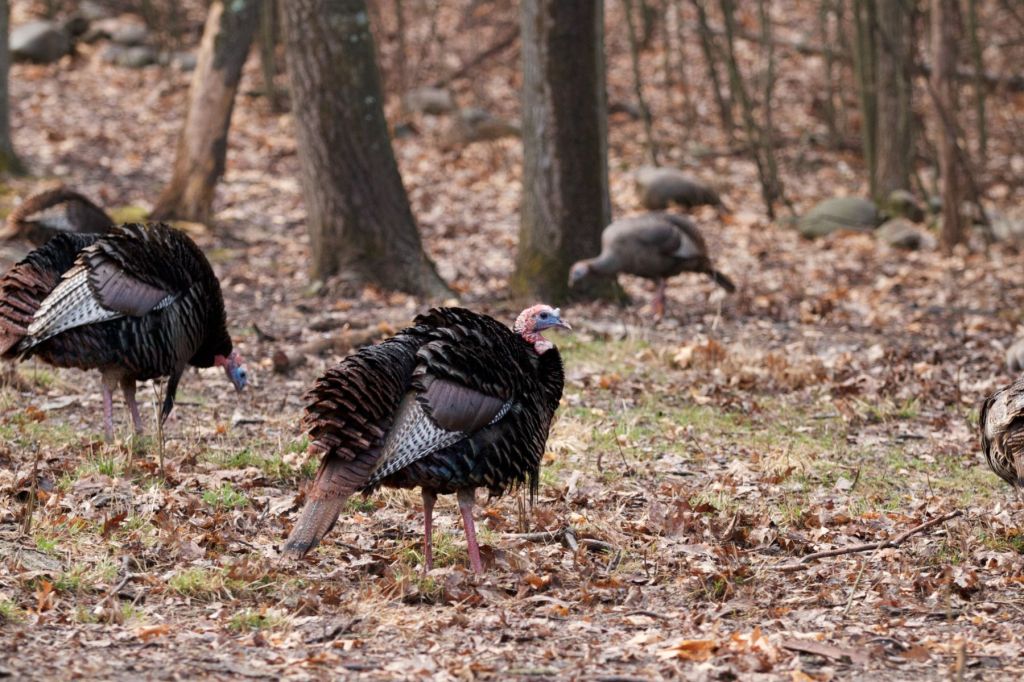
I assumed the turkeys would likely ignore me or get spooked and run back into the forest. Still, I gave them a wide berth by moving to the opposite side of the road before passing by.
But of course, as one does, I had to ‘gobble’ back at them as I started to pass. Just a friendly ‘Hello! Have a good day’ type of gobble.
That was a mistake.
The leader of the gang (yes, I now characterize all turkey groups as ‘gangs’) was seemingly hugely offended and a high-pitched gobble split the air. They decided I was worth going after. The chase started.
I covered the last 300 feet back to my car in a dead sprint. And they were on my heels the entire way (fun fact: turkeys can run up to 25 miles per hour).
Ya’ll. I’m not a fan of wild turkeys.
Still, one can’t help feeling a bit sympathetic to their plight at this time of year. For every adorable child’s turkey craft with their colorful yellow, red, and orange tail feathers, many of us are gearing up for that glistening, steaming turkey served up with sweet potatoes and stuffing at our family tables.

It’s enough that whenever I spot a turkey ‘gang’ hanging out near a road or along a farm field or pasture (thankfully from the safety of my car), I want to shout “Get outta here! Run!”
I was surprised to learn recently that our 70,000+ wild turkey population in Minnesota was not always robust as it is now. In fact, for the majority of the 20th century, turkeys were nonexistent in Minnesota. The expansion of agriculture, logging, and other forms of development in the 1800s led to the destruction and fragmentation of the turkeys’ natural habitats, which consisted of open woodlands, grasslands, and river bottoms. This loss of suitable habitat made it difficult for wild turkeys to thrive.
Additionally, unregulated and often excessive hunting played a major role in the decline of the wild turkey population. Turkeys were hunted for their meat, feathers, and even just for sport, leading to a significant reduction in their numbers. By the late 19th century, wild turkeys had become scarce and many populations were on the brink of extinction.
The turning point in their return was a trade facilitated by the Minnesota Department of Natural Resources (DNR) and the Missouri Department of Conservation. In 1971, Minnesota sent 85 live-trapped ruffed grouse to the Ozarks in return for 29 live-trapped Eastern subspecies wild turkeys. Released in southeastern Minnesota’s Houston County, the Missouri wild turkeys not only survived but thrived, marking the beginning of a remarkable conservation success story.
Beginning in 1976, Minnesota DNR wildlife employees initiated trap-and-transplant efforts, relocating turkeys from the southeast to establish new populations. The National Wild Turkey Federation played a pivotal role by providing funding, support, and advocacy for wild turkey management. Over 33 years, more than 5,000 turkeys were transferred to new sites, leading to the widespread resurgence of wild turkeys in different parts of the state.
Along with habitat restoration efforts, hunting guidelines and regulations have come a long way. Overseen by the the Minnesota DNR, hunters must obtain a turkey hunting license through a lottery system or specific wildlife management areas. The state has implemented measures such as tag lotteries, seasonal time periods, and a turkey stamp to manage and ensure sustainable turkey hunting opportunities.
These birds have come a long way in 50 years — from the brink of extinction to frequent sightings in our everyday lives. If I may offer once piece of advice, however, it would be this: never challenge the leader of a turkey gang to a gobbling contest.
Happy Thanksgiving!

 knickpoints